
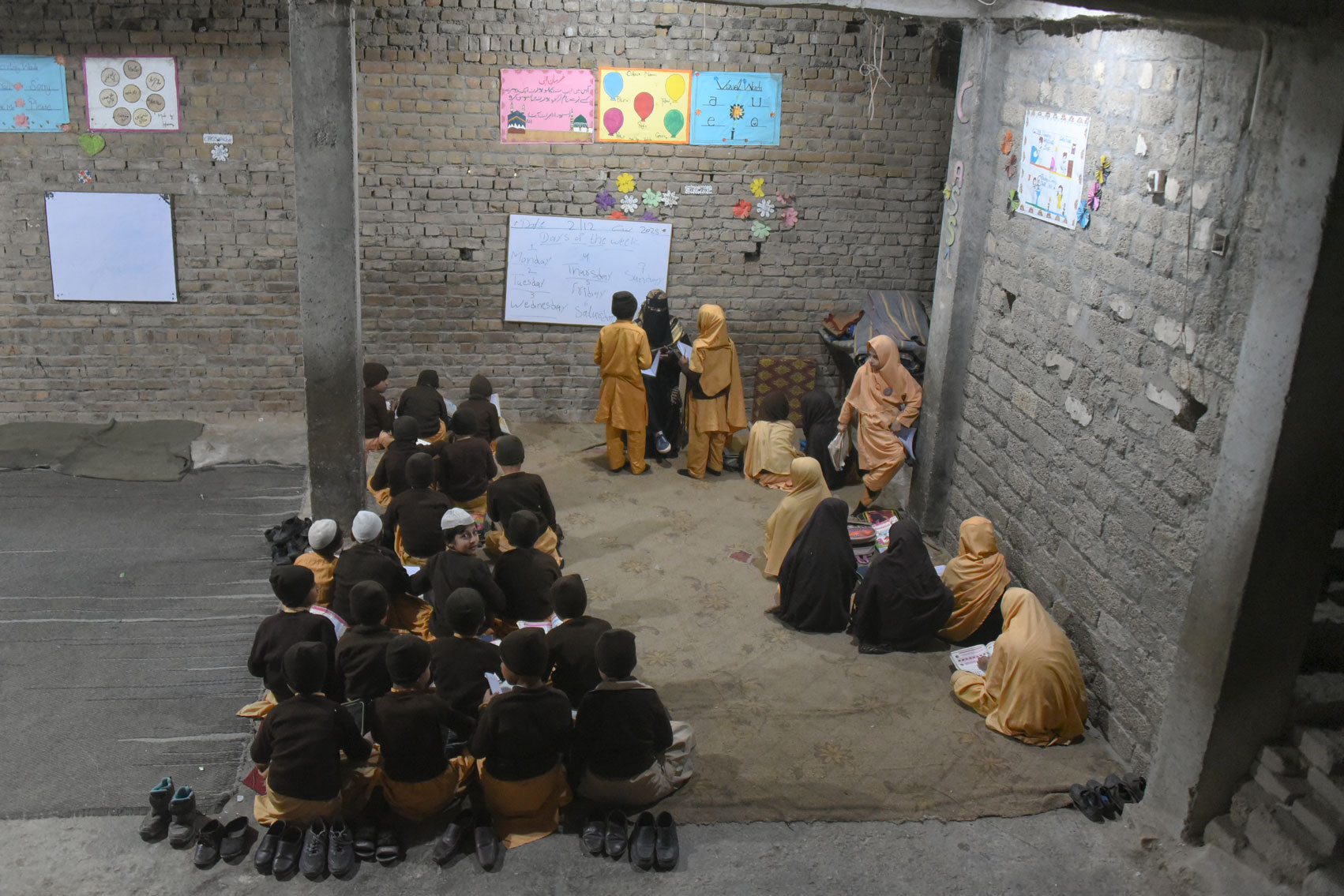
The year 2025 presented unprecedented operational challenges for Brighter Tomorrow, directly affecting access to education for some of the most vulnerable children. These challenges emerged amid large-scale deportations of Afghan refugees, the withdrawal of Proof of Registration (PoR) cards, the demolition of refugee camps and villages, and official directives restricting the rental of homes and commercial spaces to Afghan nationals without valid visas. Collectively, these measures severely disrupted the learning environment at Brighter Tomorrow.
As a direct consequence, Brighter Tomorrow was compelled to relocate following heightened scrutiny by authorities and the requirement to present Form B; issued by the National Database and Registration Authority (NADRA) as proof of nationality. While intended to trace the parents and employers of Afghan children, this requirement also excluded many Pakistani children enrolled at Brighter Tomorrow, as they too lacked formal documentation. These disruptions significantly increased operational risk and threatened the continuity of literacy, numeracy, and psycho-social support services.
At this critical juncture, Brighter Tomorrow was approached by elected representatives of the Village Council of Faqir Ghari Fazil, who proposed relocating the initiative to a more secure, community-supported location on the outskirts of Peshawar. The village council formally welcomed Brighter Tomorrow, recognizing the acute need for educational services in an area with no existing education facilities and where the majority of households live below the poverty line. This relocation substantially reduced exposure to eviction risks while strengthening community ownership of the initiative.
Brighter Tomorrow is now operating from the premises of an established local educational institute led by Qari Hussain Badshah—a respected community leader whose life trajectory reflects the transformative potential of education. Coming from a financially constrained background, Qari Hussain accessed free religious education and later devoted his life to community service. Despite limited resources, he mobilized local support to establish a purpose-built school that delivers affordable modern education alongside basic religious instruction, ensuring institutional stability and long-term sustainability.
Qari Hussain’s decision to host Brighter Tomorrow within his institution represents a clear example of positive deviance—where locally driven, cost-effective solutions address systemic challenges more effectively than external interventions alone. By offering rent-free premises and leveraging his social capital, he has enabled Brighter Tomorrow to continue delivering uninterrupted services, ensuring significantly lower operational costs and safeguarding donor investments.