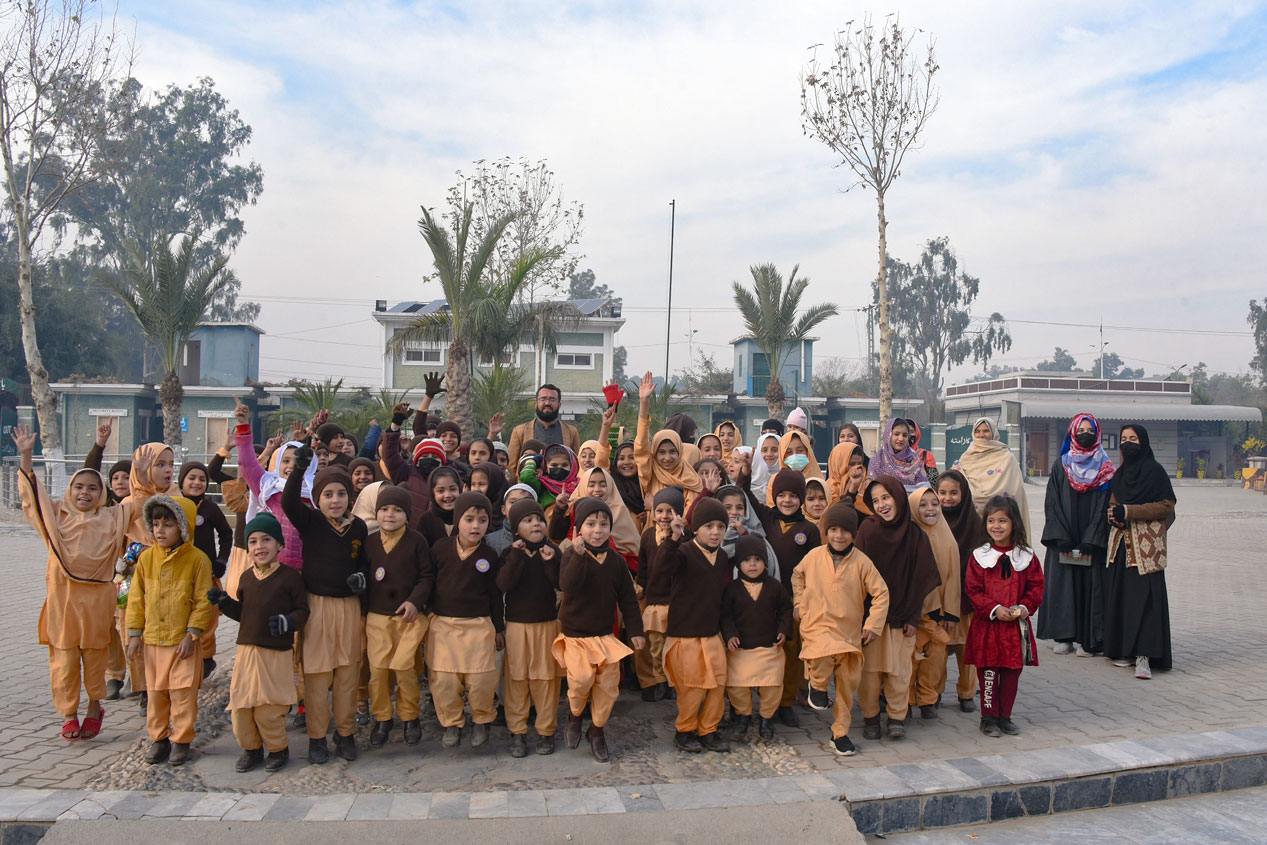
During a lesson at Brighter Tomorrow on animals and birds, many children asked whether the animals they were learning about were real or mythical. They expressed a strong desire to see these animals if they truly existed. For most of the children, direct exposure to wildlife was extremely limited. The animals they had seen in daily life were mainly dogs, cats, donkeys and horses pulling carts, and cows and water buffaloes raised in their village for milk. Similarly, the only birds familiar to them were sparrows, crows, and local myna birds.
Recognizing the gap between classroom learning and lived experience, the teachers shared the children’s questions with the program coordinator. Understanding the educational value of experiential learning, the coordinator and digital media coordinator mobilized support from the FSRT directors, who personally contributed funds to cover transportation, refreshments, rides, and lunch for a one-day educational visit.
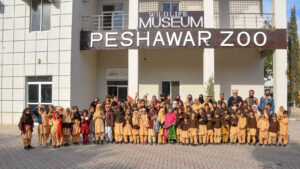
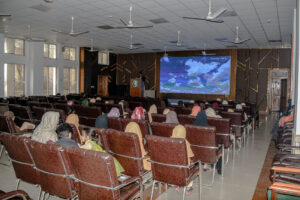
On 27 December 2025, a dedicated bus transported the village children from Brighter Tomorrow to the zoo and back. Upon arrival, the group was warmly welcomed by zoo management, who facilitated a guided learning experience. The visit began at the museum, where children were introduced to a wide range of animal and bird species through pictures and taxidermy specimens, enabling them to connect their classroom lessons with real-world examples. At the auditorium, short documentaries on a large screen expanded their understanding of nature, aquatic life, forests, deserts, mountains, and the animals and birds inhabiting these ecosystems, broadening their awareness far beyond their immediate environment. Many of these children were amazed to see videos on such a large screen.
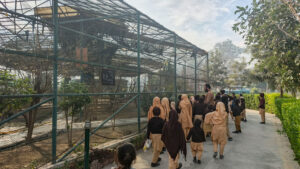
The learning continued at the zoo’s aquarium, where children were introduced to different species of fish and basic concepts of aquatic ecosystems. Guided walks through animal enclosures, birdhouses, and reptile sections helped children understand animal features, behaviors, and habitats through observation of live animals and discussion. This exposure strengthened curiosity, critical thinking, and observational skills, as children stroked a few of the birds, actively asked questions, and compared what they experienced with what they had learned in class.
This was a learning experience for some of the teachers as well who had never seen some of the more exotic animals. One teacher thought a tiger was a lion, and another mistook a cheetah for a leopard. This caused some embarrassment, but in the end they were glad for the chance to see these beautiful animals up close.
In addition to educational activities, the visit was professionally documented by Mr. Syed Muhammad Ali Saif of Camouflage Studios, who generously volunteered his time as a photographer and videographer. He captured high-quality photographs and video footage, helping preserve the children’s learning experiences and enabling Brighter Tomorrow to share the impact of the visit with donors and stakeholders.
Beyond academic learning, the visit supported social and emotional development. For many children, this was their first trip outside their community, fostering confidence, excitement, and a sense of inclusion. Group activities, including a ride on the zoo mobile and playtime on swings, see-saws, and slides, encouraged teamwork, cooperation, and positive peer interaction. For most of the children, this was the first time ever that they had ridden on anything like the zoo mobile, or played on swings or see-saws or slides.
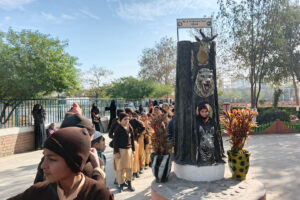
The trip also promoted civic responsibility and environmental awareness. Without prompting, the children collected litter left in the park, such as wrappers and plastic bottles, and disposed of them in designated bins. This behavior was highly appreciated by zoo management and reflected the children’s growing understanding of environmental stewardship and respect for shared public spaces.
Overall, the visit transformed abstract classroom concepts into meaningful experiences, reinforcing learning through observation, dialogue, and reflection. It demonstrated how low-cost community-supported interventions, supported by volunteers and individual donors, can significantly enhance educational outcomes, nurture life skills, and broaden horizons for children from highly marginalized communities.